
Crime Scene Cleaner
Los Santos has no shortage of chaos. Turns out somebody has to deal with what comes after. Crime Scene Cleaner takes a job idea that sounds simple and turns it into a proper multiplayer progression system with crews, interactive scenes, levels, quests, upgrades and enough variety that people might actually volunteer for another shift.
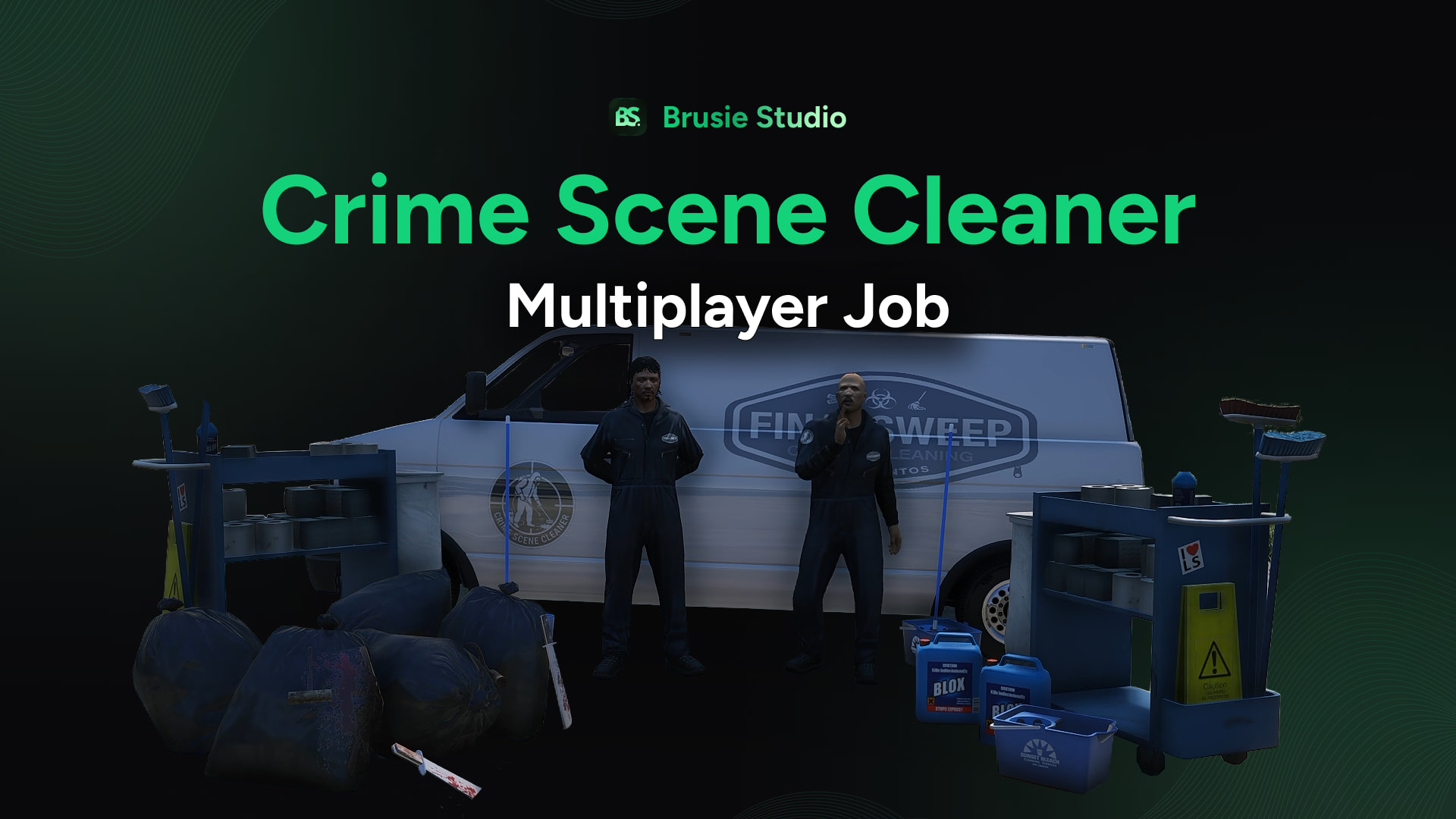
Give players a job with enough going on that they actually talk while doing it.
The interesting part is not the cleaning theme by itself. It is the structure around it. Players can work together, share rewards, complete different activities inside the same contract and keep building their character through repeated shifts.
One person handles one part of the scene, another moves to the next objective, somebody starts arguing about the payout split — suddenly you've got an actual multiplayer job instead of four people silently following the same checkpoint marker.
// TEAMWORK, BUT WITH INVOICESInvite the crew, split the money and work through the same scene together.
No pretending everybody is on the same job.
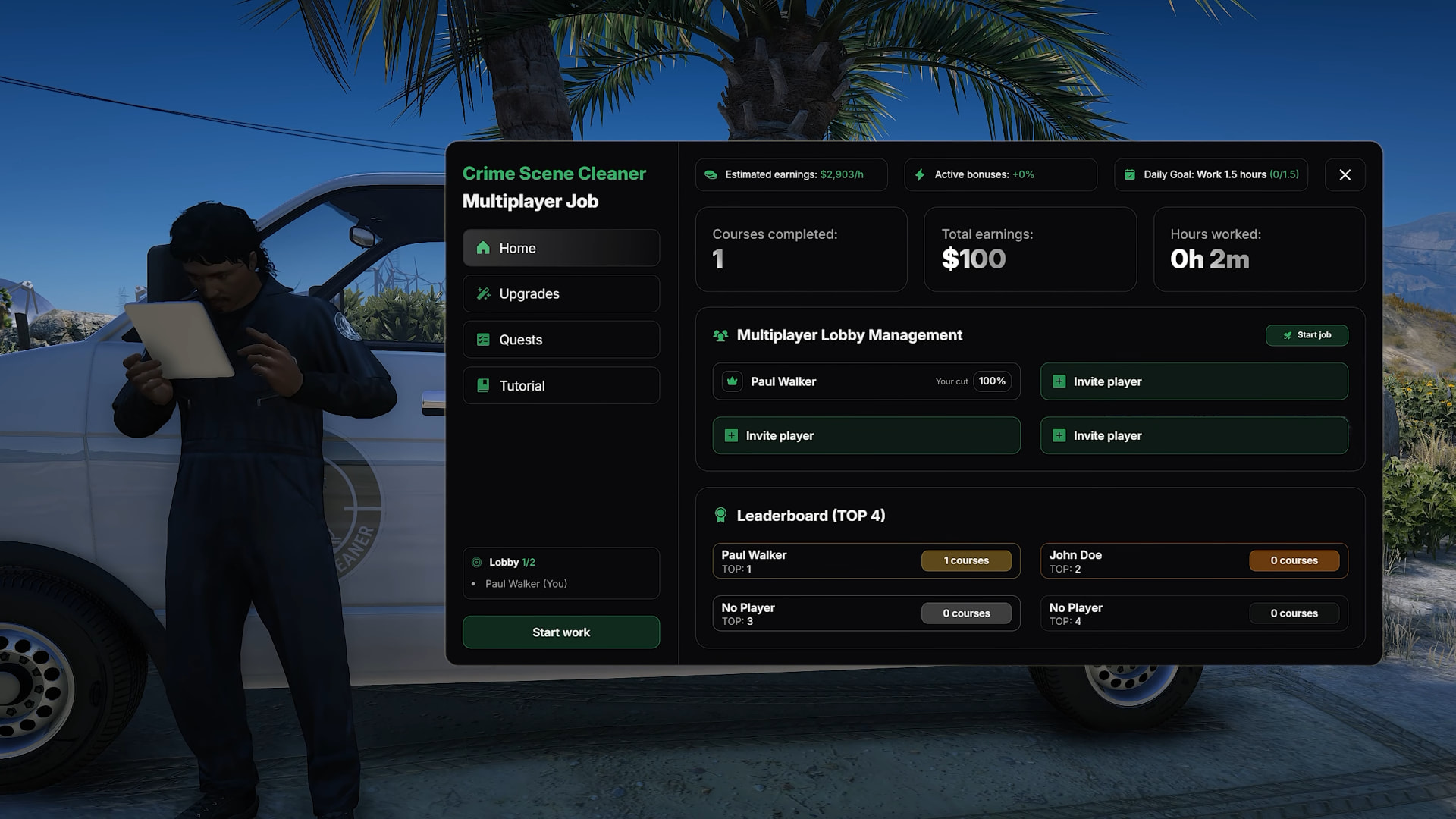
The built-in lobby handles invites, leaving and removing members, while contract progression stays synchronized between the players taking part. The lobby owner can also control percentage-based reward distribution.
Lobby Controls That Make Sense
Form the group through an actual interface instead of gathering everybody around one NPC and hoping the resource recognizes who's meant to be working.
One Scene, Shared Progress
The crew progresses through the same job state, helping cooperative work actually feel cooperative.
Everybody Wants a Bigger Cut
Percentage-based reward sharing gives the lobby owner control over how earnings are divided between crew members.
A Reason to Bring the Same Crew Back
Jobs, progression and shared activity create the kind of loop where a group can naturally become “the cleaning crew” instead of randomly teaming up for one delivery.
Give players actual little jobs inside the job.
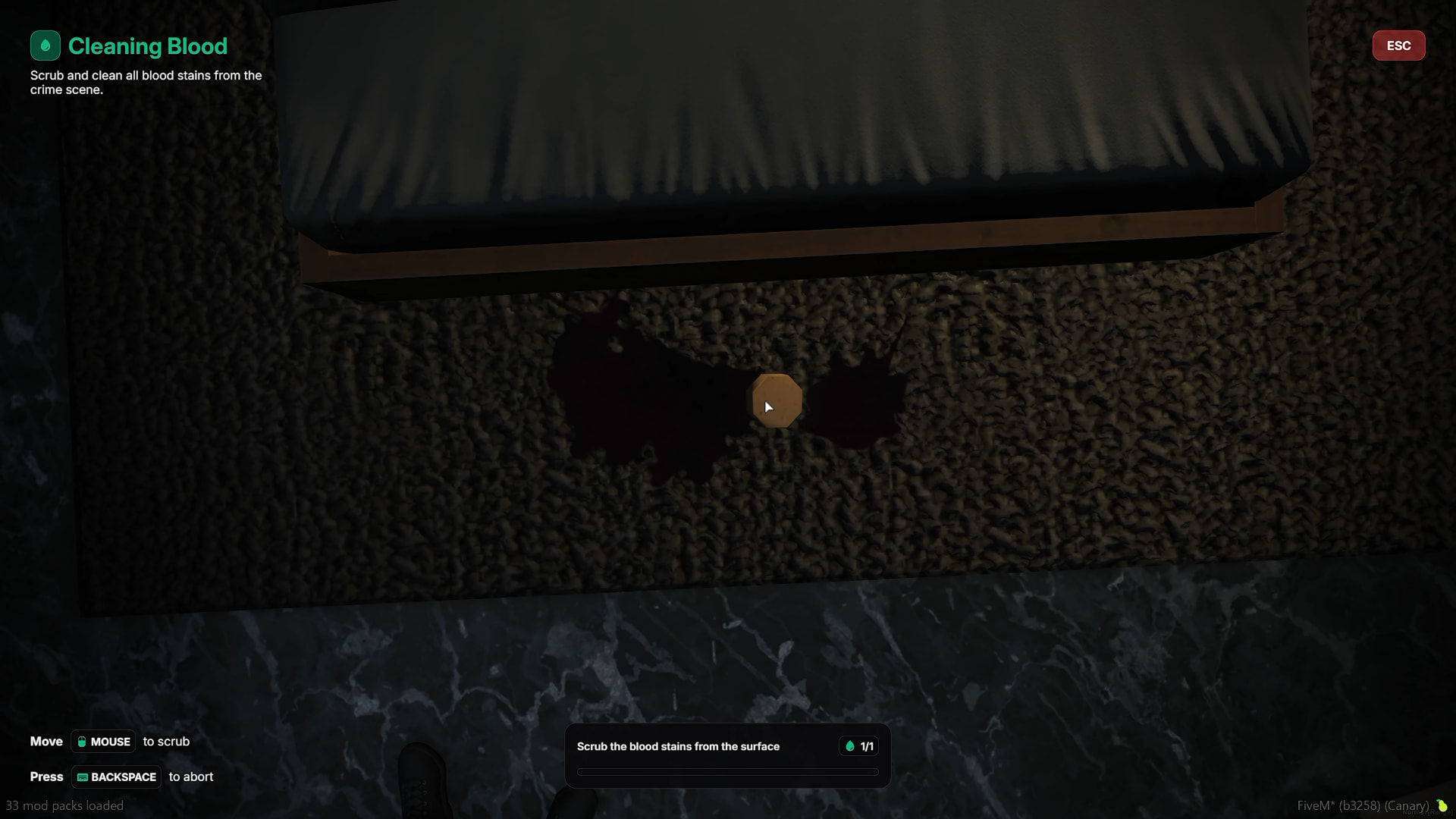
Restore the Scene
Cleaning objectives use dedicated interactions and visual effects so the work feels like something the player is actually doing rather than a timer pretending to be gameplay.
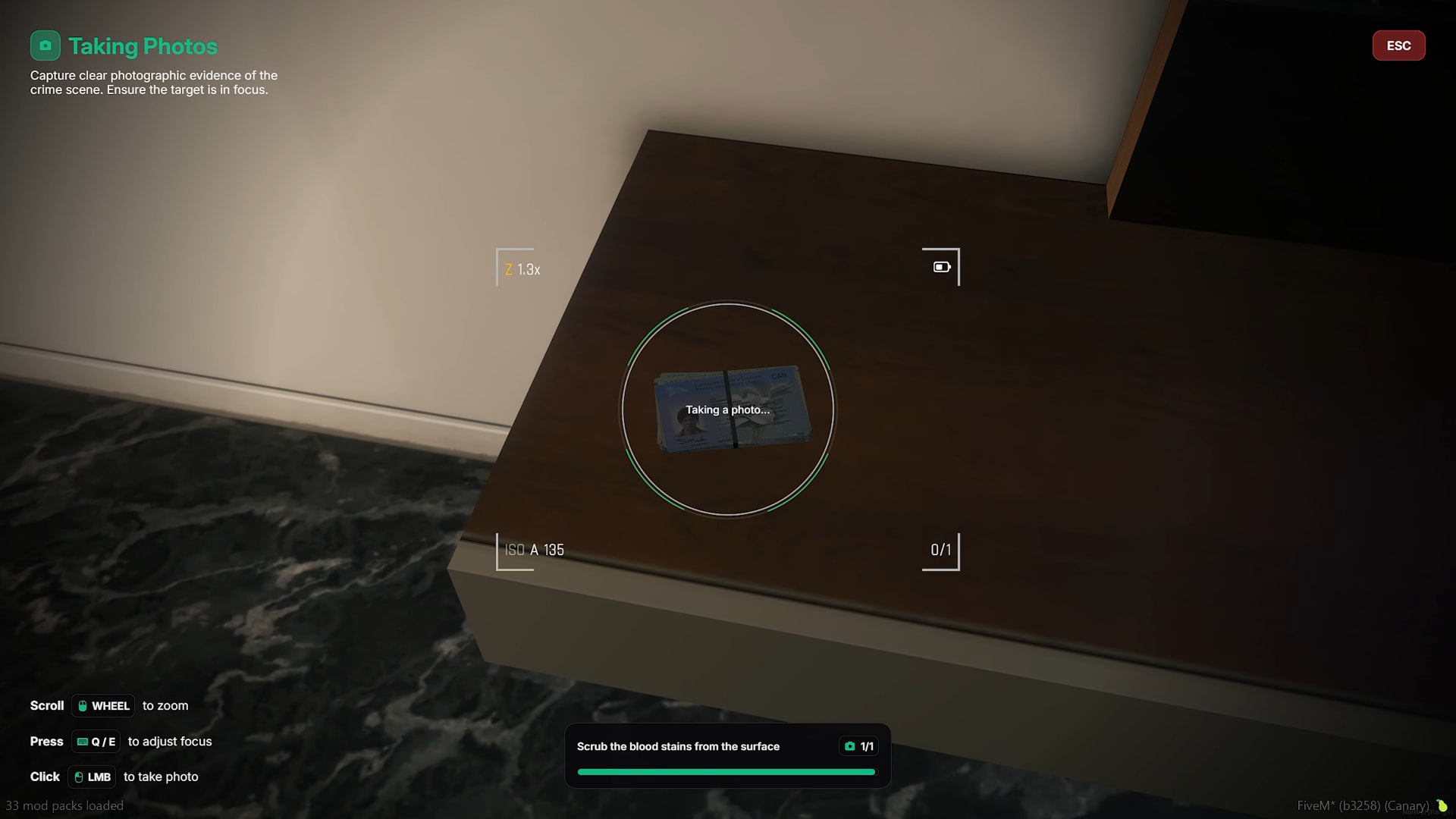
Document Before You Pack Up
Certain scene elements can involve camera-based documentation before collection, adding more rhythm to the contract than simply removing props one after another.
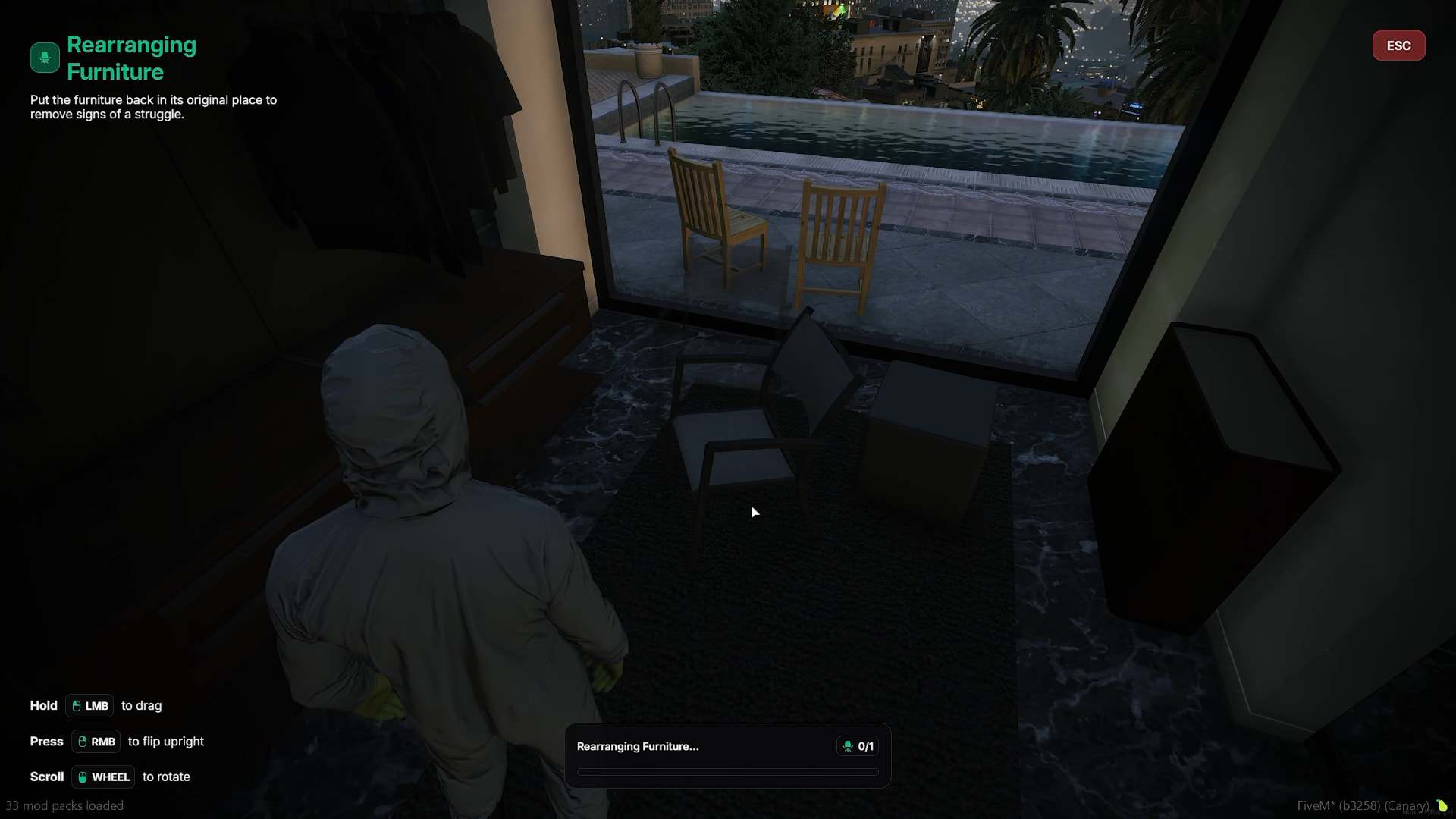
Put the Place Back Together
Physics-based furniture repositioning makes the environment itself part of the work instead of an untouchable backdrop.
Some Jobs Get More Complicated
Higher-risk contracts can introduce extra security-themed objectives and interactive UI elements, helping the alternative progression path feel different rather than just paying more for the same work.
Levels, quests and upgrades turn the job into something players can actually stick with.
Level Up
Completed work contributes to character progression.
Daily Quests
Short-term goals can reward money and EXP.
Weekly Quests
Longer objectives give regular players another reason to return.
Buy Upgrades
Progress can improve efficiency instead of only increasing a number.
It also tracks working time across sessions. So if somebody proudly announces they've spent twenty-three hours cleaning virtual apartments, the script can apparently back them up.
// CAREER CHOICES WERE MADEBuild new scenes around your own map instead of waiting for somebody else to do it.
Make another contract without opening a coordinate spreadsheet.
The admin creator can place and configure tasks directly inside the game, using visual placement tools such as gizmo controls, raycasting and surface snapping.
Build Scenes Visually
Position new task elements where they belong instead of repeatedly guessing coordinates, restarting and discovering the prop is somehow inside a wall.
Use More of Your Map
Interior and exterior support gives custom MLOs, houses, businesses and outdoor locations a chance to become part of the job rotation.
Boost the Job for Events
Global multipliers can be scheduled or activated for limited-time server events and boosted earning periods.
Keep Adding Work
A reusable creator matters because the best job script is the one players cannot completely memorize after three evenings.
Crew UI, progression, scene interactions and custom tasks all living inside the same gameplay loop.
ESX, QBCore or QBox — with open bridge files for integration.
- Frameworks
- ESX / QB / QBox Supported through open bridge files.
- Requirements
- ox_lib + oxmysql Listed alongside a compatible framework.
- UI
- React Responsive React-based interface.
- Idle Performance
- 0.00 ms Figure stated in the developer release.
- Notifications
- Multi Support Includes compatibility options for systems such as ox_lib, mythic, QB and ESX.
- Included Content
- Props + Vehicles Required vehicle models, custom props and animations are listed as included.
- Code Options
- Escrow / Source Both protected and Open Source purchase editions are offered.
- Approx. Lines
- 7,000+ Approximate line count stated by the creator.
- Subscription
- No No recurring subscription is listed.
- Support
- Available Developer support is provided through Brusie Studio.
Watch the showcase, check the docs and choose the version that makes sense for your server.
A weird job idea. A surprisingly serious gameplay loop.
Multiplayer crews, interactive tasks, shared progression, daily and weekly quests, upgrades, multiple career paths and a built-in scene creator give Crime Scene Cleaner enough structure to become an actual part of your server instead of a resource players try once and forget.